
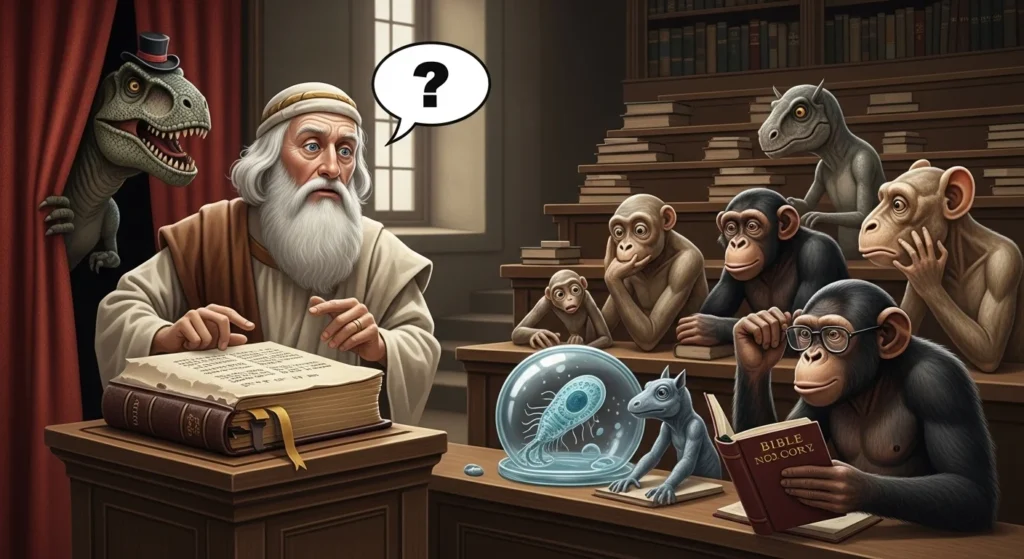
What does the Bible say about evolution? This is a deeply important question for many Christians today as science, culture, and faith often appear to be in tension. In a world filled with competing ideas about human origins, believers seek clarity, peace, and biblical truth that strengthens their faith rather than weakens it.
When asking what does the Bible say about evolution, Christians are not just looking for information—they are seeking spiritual grounding. They want to understand whether God’s Word conflicts with modern science or whether it reveals a higher truth about creation, purpose, and divine design. This topic matters because it touches identity, purpose, and the very meaning of life.
The Bible consistently points to God as the Creator of all things, offering wisdom that goes beyond human theories. As we explore Scripture, we find reassurance that our existence is intentional, meaningful, and designed by God Himself.
📖 Bible Verses on Creation and God’s Design
Genesis 1:1
“In the beginning God created the heaven and the earth.” (KJV)
This foundational verse establishes God as the ultimate Creator. It reminds believers that everything begins with Him, not chance. When reflecting on what does the Bible say about evolution, this verse anchors faith in divine origin. It encourages trust in God’s authority over all creation.
Genesis 1:27
“So God created man in his own image…” (KJV)
Human beings are uniquely created in God’s image, giving us value and purpose. This challenges purely material explanations of humanity. Spiritually, it calls us to live with dignity and responsibility. Reflect on your identity as God’s intentional creation.
John 1:3
“All things were made by him; and without him was not any thing made that was made.” (KJV)
Christ is revealed as active in creation. This verse strengthens the belief that creation is purposeful and Christ-centered. It reminds believers that what does the Bible say about evolution ultimately leads back to Jesus as Creator.
Colossians 1:16
“For by him were all things created…” (KJV)
Everything in heaven and earth was created through Christ. This reinforces divine authorship over the universe. It encourages believers to see creation as ordered, intentional, and sustained by God.
Psalm 139:13–14
“For thou hast possessed my reins: thou hast covered me in my mother’s womb…” (KJV)
This passage highlights God’s intimate role in human formation. It shows that life is not accidental but carefully designed. Spiritually, it brings comfort and identity rooted in God’s craftsmanship.
Romans 1:20
“For the invisible things of him… are clearly seen, being understood by the things that are made…” (KJV)
Creation itself reveals God’s power. Nature is evidence of divine existence. When asking what does the Bible say about evolution, this verse shows that creation points to a Creator.
Hebrews 11:3
“Through faith we understand that the worlds were framed by the word of God…” (KJV)
Faith helps us understand origins beyond human observation. This verse bridges belief and understanding. It reminds us that spiritual truth often goes beyond physical explanation.
Exodus 20:11
“For in six days the Lord made heaven and earth…” (KJV)
This affirms God’s direct creative action. It emphasizes order and intentionality in creation. Believers see structure and purpose in God’s work.
Isaiah 45:12
“I have made the earth, and created man upon it…” (KJV)
God personally declares His role as Creator. This reinforces divine authority over humanity and earth. It calls us to humility before God’s design.
Job 33:4
“The spirit of God hath made me, and the breath of the Almighty hath given me life.” (KJV)
Life is described as God-breathed. This verse emphasizes spiritual origin. It encourages gratitude for life as a divine gift.
2 Peter 3:5
“By the word of God the heavens were of old…” (KJV)
The universe was formed by God’s spoken word. This highlights divine power in creation. It strengthens faith in God’s sovereignty over all existence.
1 Timothy 4:4
“For every creature of God is good…” (KJV)
Creation is declared good and purposeful. This reinforces God’s positive intent in making the world. It encourages respect for all creation.
✝️ Theological Overview
When studying what does the Bible say about evolution, Scripture consistently emphasizes God as the intentional Creator of all life. The Bible does not focus on scientific processes but on divine purpose, identity, and meaning.
Theologically, creation is not random—it is relational. God creates with intention, order, and spiritual significance. Many Christian interpretations of science and faith suggest that even if natural processes exist, they operate under God’s sovereign design.
This topic matters today because it shapes how believers understand identity, morality, and purpose in a scientific age.
🕊️ Practical Application
To apply biblical truth about creation in daily life:
- Read Genesis 1–2 regularly for foundational understanding
- Pray for wisdom when studying science and faith topics
- Meditate on Psalms about God as Creator
- Strengthen belief in purposeful identity in Christ
- Avoid fear-based confusion and seek biblical grounding
Faith and learning can coexist when centered on God’s Word.
🙏 Prayer
Lord God,
Thank You for creating me with purpose and love. Help me to trust Your Word when questions arise about life and creation. Give me wisdom to understand truth and peace to rest in Your design. Strengthen my faith and guide my heart in Your truth. Amen.
❓ FAQs
What does the Bible say about evolution and creation?
The Bible teaches God as the Creator of all things (Genesis 1:1), emphasizing purpose and design.
Does Christianity accept evolution?
Views vary, but many Christians believe God is the ultimate Creator guiding all processes.
What does Genesis teach about human origin?
Genesis teaches that humans are created in God’s image (Genesis 1:27).
Can faith and science work together?
Yes, many believers see science as studying God’s creation while faith explains purpose.
Why is creation important in Christianity?
It establishes God’s authority, human identity, and the meaning of life.
🧭 Conclusion
The Bible consistently affirms God as the Creator of all things, offering a foundation of faith that transcends human theories. While science explores how life may function, Scripture reveals why we exist. Hold onto this truth as a source of strength, hope, and spiritual confidence.