

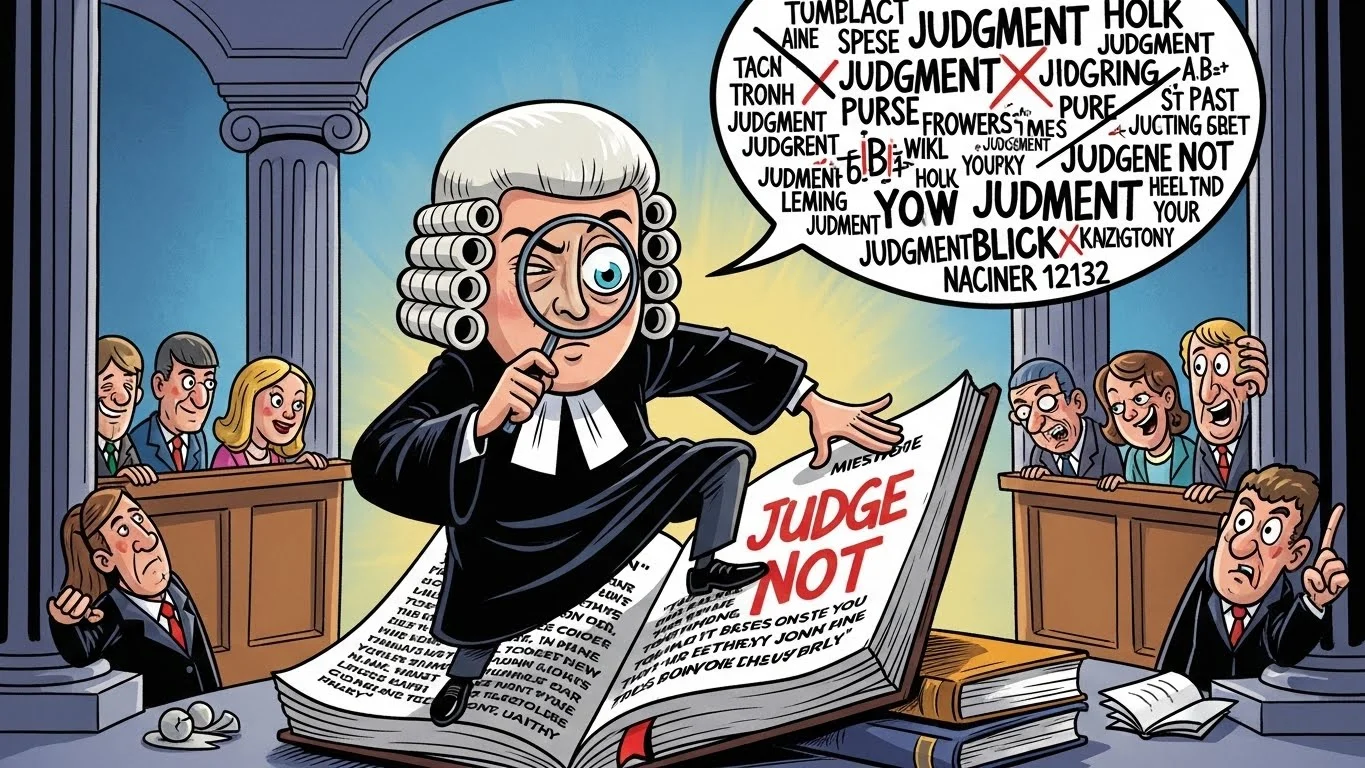
Bible Verses About Judging Others
Matthew 7:1–2
“Do not judge, or you too will be judged. For in the same way you judge others, you will be judged, and with the measure you use, it will be measured to you.”
Jesus warns against harsh, hypocritical judgment.
This doesn’t mean we can’t discern sin — it means we must first examine our own hearts and approach others with humility and grace.
Luke 6:37
“Do not judge, and you will not be judged. Do not condemn, and you will not be condemned. Forgive, and you will be forgiven.”
Judgment without love leads to condemnation, but forgiveness leads to freedom.
This verse calls us to replace criticism with compassion and mercy.
John 7:24
“Stop judging by mere appearances, but instead judge correctly.”
Here, Jesus clarifies that believers should make righteous judgments based on truth, not on surface impressions or bias.
Discernment rooted in God’s Word is different from self-righteous judgment — it’s wisdom guided by love.
Romans 2:1
“You, therefore, have no excuse, you who pass judgment on someone else, for at whatever point you judge another, you are condemning yourself, because you who pass judgment do the same things.”
Paul warns against hypocrisy — judging others for sins we also commit.
This verse reminds us to practice humility, realizing that all of us need God’s mercy equally.
James 4:11–12
“Brothers and sisters, do not slander one another… There is only one Lawgiver and Judge, the one who is able to save and destroy. But you — who are you to judge your neighbor?”
Only God has full authority to judge hearts and motives.
When we take that role upon ourselves, we step out of love and into pride. Our role is to love; God’s role is to judge.
Galatians 6:1
“Brothers and sisters, if someone is caught in a sin, you who live by the Spirit should restore that person gently. But watch yourselves, or you also may be tempted.”
Correction should come from humility and care, not pride or anger.
We are called to restore, not reject — to guide others toward repentance with gentleness and grace.
Proverbs 21:2
“A person may think their own ways are right, but the Lord weighs the heart.”
Human judgment is limited; God alone sees motives.
This verse reminds us to avoid assuming the worst about others and to leave final judgment in God’s hands.
1 Corinthians 4:5
“Therefore judge nothing before the appointed time; wait until the Lord comes. He will bring to light what is hidden in darkness and will expose the motives of the heart.”
We often judge too soon or too harshly.
God alone knows every detail — our job is to trust His perfect justice and timing.
Ephesians 4:2
“Be completely humble and gentle; be patient, bearing with one another in love.”
This verse captures the spirit of how believers should approach others.
Even when addressing sin, humility and patience must lead the way.
Micah 6:8
“He has shown you, O mortal, what is good. And what does the Lord require of you? To act justly and to love mercy and to walk humbly with your God.”
God desires a balance — justice and mercy walking hand in hand.
When we judge rightly, we do so through love, humility, and alignment with His truth.
Theological Overview
The Bible’s teaching on judging centers on the heart’s motive. Judging becomes sinful when it’s rooted in pride, hypocrisy, or condemnation. However, the Bible also calls believers to discern truth from error and to lovingly correct one another.
Jesus condemned self-righteous judgment, not spiritual discernment. Christians are called to speak truth, but always in love (Ephesians 4:15). Only God can see the heart fully — our role is to extend grace while upholding righteousness.
Biblical judgment is never about superiority; it’s about restoration. It seeks healing, not humiliation — redemption, not rejection.
Practical Application
-
Examine your heart first. Before judging others, ask God to reveal your own blind spots.
-
Judge actions, not motives. You can discern behavior without assuming someone’s heart.
-
Correct gently. Use kindness and Scripture to guide others toward truth.
-
Forgive quickly. Let mercy override the desire to criticize.
-
Trust God’s justice. Leave ultimate judgment to Him — His wisdom is perfect.
Short Prayer
Dear Lord,
Help me to see others through Your eyes — with compassion, truth, and humility. Forgive me for times I’ve judged harshly or unfairly. Teach me to walk in discernment, not condemnation, and to extend grace as freely as You have given it to me. In Jesus’ name, Amen.