

Bible Verses About Crystals and Related Themes
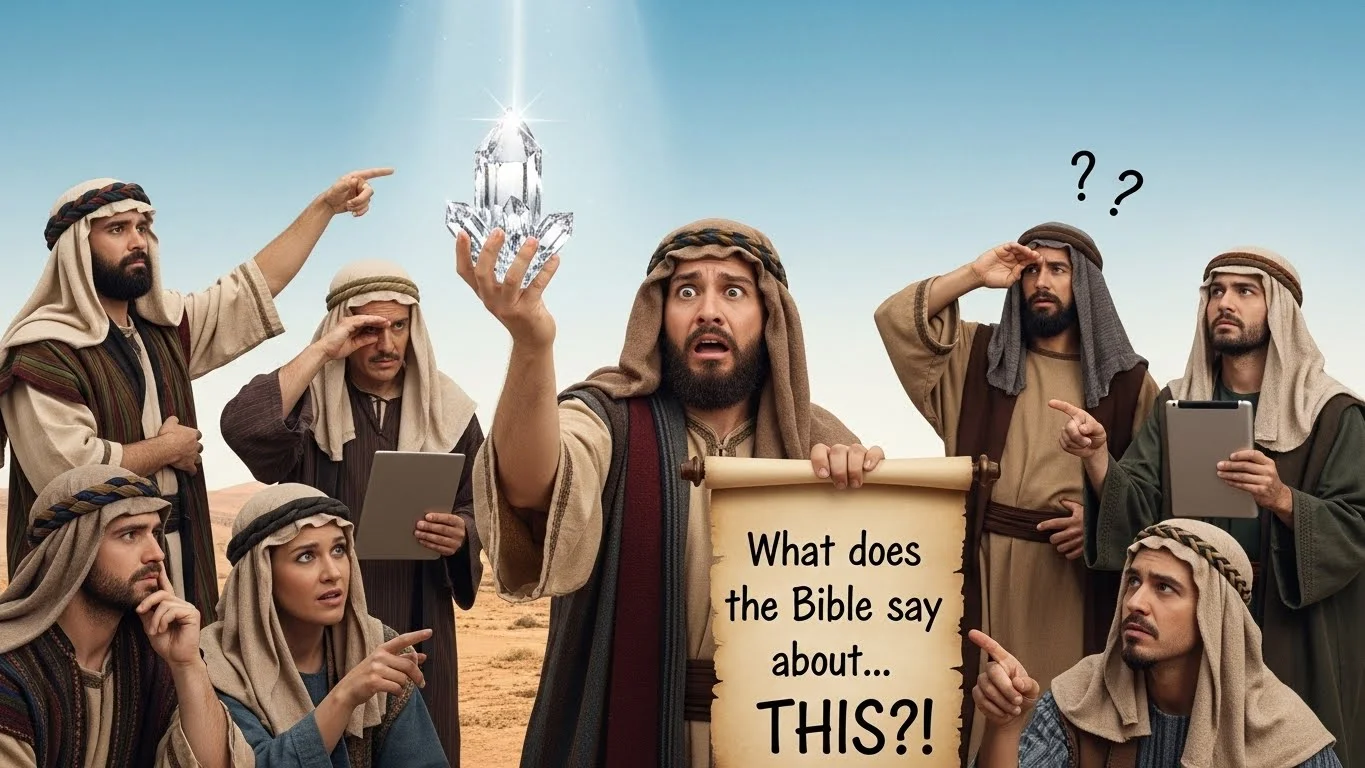
While the Bible doesn’t specifically mention modern “crystals” for healing or spiritual power, it provides important principles about seeking God instead of relying on objects or occult practices.
Exodus 20:3 (NIV)
“You shall have no other gods before me.”
Reflection:
This verse reminds us that God alone is our source of guidance, protection, and strength. Relying on objects, like crystals, for power or spiritual insight can distract us from trusting in God’s supremacy.
Positive Change:
By prioritizing God above all, Christians can build a deeper relationship with Him, gaining peace and clarity without seeking supernatural power from physical items.
Deuteronomy 18:10-12 (NIV)
“Let no one be found among you who…practices divination or sorcery, interprets omens, engages in witchcraft…for these are detestable to the Lord.”
Reflection:
Crystals are sometimes associated with occult or mystical practices. This passage cautions believers against engaging in any form of divination or seeking hidden knowledge outside God’s Word.
Positive Change:
Choosing God’s guidance over mystical practices strengthens faith and encourages discernment in spiritual matters.
Jeremiah 17:5 (NIV)
“This is what the Lord says: ‘Cursed is the one who trusts in man, who draws strength from mere flesh and whose heart turns away from the Lord.'”
Reflection:
Placing trust in objects or human wisdom rather than God can lead to spiritual weakness. Crystals may be tempting, but true strength comes from God’s Spirit.
Positive Change:
Relying fully on God encourages a heart of faith, peace, and spiritual confidence.
1 Corinthians 10:31 (NIV)
“So whether you eat or drink or whatever you do, do it all for the glory of God.”
Reflection:
This verse teaches us to honor God in every action and choice. Even seemingly neutral practices, like using crystals, should be evaluated through the lens of glorifying God.
Positive Change:
Mindful living aligned with God’s glory fosters spiritual growth and intentional faith.
Psalm 119:105 (NIV)
“Your word is a lamp to my feet and a light to my path.”
Reflection:
God’s Word, not objects, guides our journey. Seeking wisdom in Scripture ensures safe, godly choices.
Positive Change:
Daily meditation on Scripture replaces the need for external “spiritual aids,” strengthening faith and discernment.
Isaiah 8:19 (NIV)
“When someone tells you to consult mediums and spiritists, do not listen…seek guidance from God instead.”
Reflection:
Crystals are sometimes linked to spiritism or divination. This verse encourages turning away from such practices and trusting God for insight.
Positive Change:
Turning to God for direction promotes spiritual clarity and prevents reliance on unbiblical sources.
Proverbs 3:5-6 (NIV)
“Trust in the Lord with all your heart and lean not on your own understanding; in all your ways submit to him, and he will make your paths straight.”
Reflection:
Faith in God, not physical objects, ensures true guidance. Crystals cannot replace the wisdom that comes from trusting the Lord.
Positive Change:
Applying this trust daily fosters peace, confidence, and a Christ-centered life.
Colossians 2:8 (NIV)
“See to it that no one takes you captive through hollow and deceptive philosophy, which depends on human tradition and the elemental spiritual forces of this world rather than on Christ.”
Reflection:
Some crystal practices are rooted in worldly philosophies or elemental spiritual beliefs. Scripture reminds believers to stay anchored in Christ.
Positive Change:
Discernment protects the heart and mind from deception while reinforcing a Christ-focused worldview.
James 1:5 (NIV)
“If any of you lacks wisdom, you should ask God, who gives generously to all without finding fault, and it will be given to you.”
Reflection:
Instead of seeking mystical powers from crystals, believers are invited to ask God for wisdom directly.
Positive Change:
Prayerful reliance on God brings clarity and practical guidance, nurturing spiritual growth.
Theological Overview
Crystals themselves are natural creations and not inherently evil. However, the Bible consistently warns against relying on objects or mystical practices for guidance, protection, or power. Theologically, Christians are called to place their trust fully in God, relying on His Word, His Spirit, and His promises. Any attempt to draw spiritual power from objects can distract from the ultimate source of life—God Himself.
This topic is significant today because modern trends often blur spiritual discernment. Christians need clarity to ensure their practices honor God and build faith rather than dependence on worldly or occult traditions.
Practical Application
Evaluate Intentions: Before using crystals, ask why you want to use them. Is it for aesthetic purposes or spiritual power?
Seek Scripture First: Turn to the Bible for guidance, wisdom, and spiritual insight.
Pray for Discernment: Ask God to reveal what aligns with His will.
Avoid Occult Practices: Steer clear of any rituals claiming supernatural power from crystals.
Trust God’s Promises: Replace reliance on objects with prayer, Scripture, and fellowship.
Short Prayer
Heavenly Father, thank You for guiding us with Your Word. Help us place our trust fully in You, not in objects or worldly practices. Grant us discernment, wisdom, and a heart that seeks Your glory above all. Amen.